
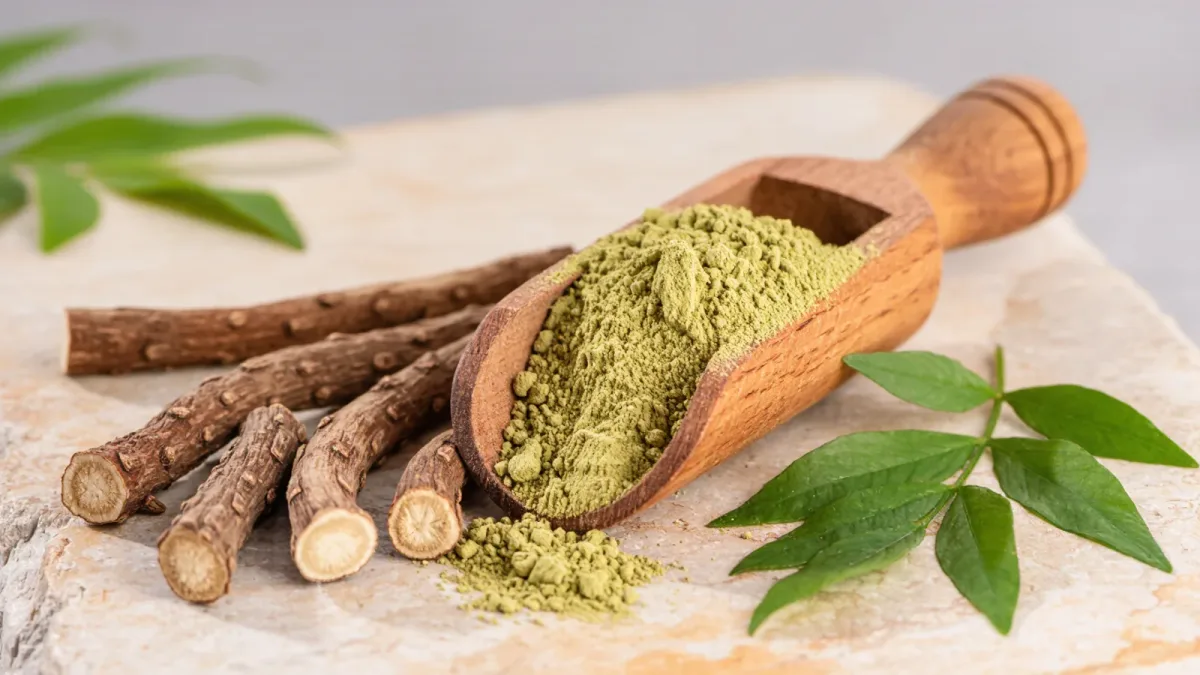
The randomized trials do show a signal: in the most-cited trial, published in the Indian Journal of Psychological Medicine in 2012, 300 mg of ashwagandha root extract twice daily for eight weeks reduced perceived stress scores by about 14 points on the Perceived Stress Scale and serum cortisol by 27.9 percent versus placebo in 64 chronically stressed adults. But the supporting literature is roughly a dozen small trials of eight weeks or less, mostly testing standardized root extracts funded by their manufacturers, and since 2023 regulators in Denmark have suspended ashwagandha products over possible liver and hormonal effects — a running objection the marketing rarely mentions.
Standard caveat, stated plainly: this site publishes information, not medical advice. Stress that interferes with daily life, and any question about supplement safety, belongs with a clinician — ashwagandha interacts with thyroid, sedative, and immunosuppressant medications.
What did the randomized trials actually measure?
The 2012 trial by Chandrasekhar and colleagues is the anchor study: a double-blind, placebo-controlled design, eight weeks, 300 mg of root extract twice daily, with outcomes on both the Perceived Stress Scale and morning serum cortisol. Follow-up trials extended the pattern. A 2019 randomized trial by Salve and colleagues in the Journal of Ethnopharmacology used 300 mg daily over twelve weeks and reported reduced cortisol and improved self-assessed mood scores. A 2019 study by Lopresti and colleagues in Stress and Health, in men with self-reported stress, found improvements in cortisol response and psychological measures at 300 mg twice daily.
- Doses in the positive trials cluster at 300 to 600 mg per day of standardized root extract.
- Trial durations run six to twelve weeks; there is essentially no long-term safety data beyond that window.
- Sample sizes are small — most between 50 and 100 participants.
- Nearly all tested a specific branded, standardized extract supplied by the manufacturer of that extract, a funding structure that should temper generalization.
Do the meta-analyses agree?
Broadly, yes, with the same limitations attached. Pratte and colleagues' 2014 meta-analysis in the Journal of Alternative and Complementary Medicine pooled five trials and found significant anxiolytic effects with what the authors called limited quality evidence. A 2022 meta-analysis by Akhgarjand and colleagues in PLOS One, restricted to randomized controlled trials reporting cortisol, estimated a significant reduction in serum cortisol compared with placebo. The consistent caveats across both: heterogeneity of extracts, short durations, small samples, and manufacturer funding — the authors of the 2022 analysis noted the risk of bias as high in several included trials.
What about sleep, the other claim on the label?
There is a modest trial record here too, largely preliminary. A 2021 randomized trial by Cheah and colleagues in the Journal of Clinical Sleep Medicine reported improved sleep quality on validated questionnaires in insomniac and non-insomniac participants taking 300 mg twice daily, with actigraphy-measured effects weaker than the questionnaire effects. The National Center for Complementary and Integrative Health's ashwagandha summary treats the sleep and stress evidence as suggestive but not definitive, which is a fair reading of the whole file.
Related stories: Green Tea Extract and the Liver: Reviewing the Safety Reports Behind the Warning Labels · Vitamin D Dosing, Updated: What the Large Trials Changed About How Much Is Enough.
Why did Denmark suspend ashwagandha products?
In April 2023, the Danish Medicines Agency removed ashwagandha products from sale as traditional herbal medicines, citing reported cases of liver injury with probable or possible connection to the herb, along with theoretical concerns about effects on thyroid hormones and fetal development, and asked the European level to examine the issue. The agency's action was precautionary — causation was not proven in every case — but it is documented, dated, and part of any honest summary. The NIH's LiverTox database also carries an entry on ashwagandha noting reported liver injury cases that typically resolved after discontinuation. Anyone with liver disease, thyroid conditions, pregnancy, or an upcoming pregnancy should not start ashwagandha without discussing it with a clinician.
What would a careful label-reader ask before buying?
Three things. First, which extract: the trials used standardized root extracts at defined withanolide contents, and a formula without that standardization has no trial behind it. Second, dose parity: benefits appeared at 300 to 600 mg daily, so a capsule containing 100 mg is a different proposition than the one the studies tested. Third, the funders: because the landmark trials tested manufacturer-supplied extracts, the marketing claim “clinically proven” attaches to a specific ingredient at a specific dose in a small trial — not to ashwagandha as a category.
The balanced summary: a real cortisol and stress-score signal in short, small, extract-specific trials; a precautionary regulatory suspension in at least one European country; and no long-term safety record.
Frequently asked questions
How fast do the stress effects appear?
In the trials that reported timelines, outcome measurements ran at four, eight, and twelve weeks, with the 2012 anchor study's headline results at eight weeks of 300 mg twice daily. Nothing in the published record supports claims of same-week effects.
Is ashwagandha safe for the liver?
Reported liver injury cases exist — summarized in the NIH LiverTox database and cited in the Danish Medicines Agency's 2023 suspension — usually resolving after stopping the herb. The absolute risk in users is unknown because trials were small and short. Persistent fatigue, dark urine, or jaundice while taking it warrants stopping and contacting a clinician.
Can ashwagandha change thyroid hormones?
Small human and animal studies have reported increases in thyroid hormone levels, which is part of the Danish agency's stated concern. People taking levothyroxine or with thyroid conditions should not combine the two without clinical supervision.
Does the form of ashwagandha matter?
The published trials used standardized root extracts — some withanolide-standardized, some leaf-and-root — and results are attributed to those specific extracts. Products made from other plant parts or without standardization have no comparable evidence behind them.